








Bacterial Profile and Their Antimicrobial Susceptibility Pattern of Isolates Recovered from Intensive Care Units of Libyan Hospitals.
- Authors
-
-
Ahmed Alsharksi
Department of Microbiology, Faculty of Medicine, Misurata University, LibyaAuthor -
Abdalla Ali
Department of Chemistry, Faculty of Education, Misurata University, LibyaAuthor -
Adam Mustapha
Department of Microbiology, Faculty of Life Sciences, University of Maiduguri, NigeriaAuthor -
Muna Alshagmani
Department of Medical Laboratory, Alyaqen Medical Science College, Misurata, LibyaAuthor
-
- Keywords:
- Hospital-Associated Infection, Antibiotic Resistance, ICU, Public Health, Misurata, Libya.
- Abstract
-
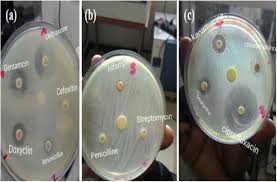
Presence of Bacterial contamination in hospital environments, particularly intensive care units, poses a serious threat to global public health in the world with high morbidity and mortality rates. Of more concern is the emergence of multidrug-resistant bacteria on medical devices, inanimate surfaces, health care providers, and patients in the intensive care unit, which could lead to further cross-contamination and infection. This study aimed to assess the bacterial profile and their antimicrobial susceptibility patterns of bacterial isolates from the intensive care unit of the Emergency unit, internal medicine, and coronary unit of Misurata Central Unit of Misurata, Libya. A unit-based cross-sectional study was conducted on three Intensive Care units from 1st December 2024 to 27th December 2024. In this project, a total of 102 swab samples from the intensive care unit environment were collected using cotton swabs. Standard Microbiological techniques to include culture method and Gram stain, were employed for the identification of the isolates. Antimicrobial susceptibility tests for bacterial isolates were performed by using the Kirby-Bauer disk diffusion method. In the total of 102 swab samples, bacterial growth was observed in 19.6% (20/102) of the total samples. Out of the total bacterial growth recovered, the Coronary care unit had the highest, 50% (10/20), followed by the Emergency unit 35% (7/20), and the Internal medicine unit had 15% (3/20). The most frequently found isolate was Staphylococcus aureus 75% (15/20), followed by Streptococcus pyogenes 15% (3/20), Pseudomonas aeruginosa 5% (1/20), and E coli 5% (1/20). Results of the antibiotic susceptibility pattern revealed that most of the isolates are multidrug-resistant. Results from this study showed bacterial contamination of the ICU environments and their resistance patterns, which suggest that patients are prone to hospital-associated infection. It is recommended that strict sterilization of intensive care units be standardized and the hygiene of hospital workers be enforced to prevent transmission of infection in hospital environments.
- References
- Cover Image
-
- Downloads
- Published
- 2025-08-02
- Issue
- Volume 1, Issue 3, 2025
- Section
- Articles
How to Cite
Most read articles by the same author(s)
- Ahmed Alsharksi, Abdalla Ali, Adam Mustapha, Clostridium difficile A-B Toxins as a Cause of Diarrheal Disease: Data from a University Hospital in Northern Cyprus , Razi Medical Journal: Volume 1, Issue 4, 2025
Similar Articles
- Ahmed Abu-Gharsa, Short-Term and Long-Term Outcomes of Mesh Versus Non-Mesh Repair in Emergency Inguinal Hernia Surgery , Razi Medical Journal: Volume 2, Issue 1, 2026
- Conference Committee , 2nd IMU Conference on Medical education , Razi Medical Journal: Volume 1, Supp 1, 2025
- Khaled Smeo, Evaluation of Wound Healing and Pain Perception After Frenectomy Using 810 Nm Diode Laser in A Young Patient: A Case Report , Razi Medical Journal: Volume 1, Issue 4, 2025
- Malak Eljafari, Ebtihal Franda, Analgesic Effect of Ethanolic Buthus occitanus Tail Extract in Albino Mice , Razi Medical Journal: Volume 2, Issue 1, 2026
- Abdulmajid Elshawesh, Tarek Esmail, Khaled Ben Salah, Kamal Elsebsi, Abduladim Affat, Observational Study of Pterygoid, Zygomatic and Subperiosteal Implants: Treatment Strategies, Clinical Outcomes, and Complications for Severe Maxillary and Mandibular Atrophy , Razi Medical Journal: Volume 2, Issue 2, 2026 (April to June)
- Misbah Elfagih, Mohamed Elfagieh, Recurrent Retroauricular Myxofibrosarcoma in Libya: A Case Report , Razi Medical Journal: Volume 2, Issue 1, 2026
- Jamal Abu Dina, Farij Traina, Ghadi Abolamdi, Sumeia Salem, Wala Abdalla, Kamal Sepsi, Safety, Efficacy, and Clinical Outcomes of a Combined Sedation Protocol in Pediatric Dental Procedures: A Two-Year Retrospective Study , Razi Medical Journal: Volume 2, Issue 2, 2026 (April to June)
- Ahmed Garad, Abdul Azim Al-Khadrawi, Real-Time Electrocardiogram Monitoring System Using Internet of Things Technology and ESP32 Microcontroller for Remote Healthcare Applications , Razi Medical Journal: Volume 2, Issue 2, 2026 (April to June)
- Yaser Mustafa Garmadi, An Eruptive Xanthoma in A Libyan Patient: Case report and review of literature. , Razi Medical Journal: Volume 2, Issue 2, 2026 (April to June)
- Wesam Elsaghayer, Mohamed Bashagha, Wafaa Babh, Misbah Elfagih, Mohamed Elfagieh, Esraa Obida, Ebrahim Elmahjoubi, Touch Imprint Cytology of Core Needle Biopsy Specimen, Integrated with Radiologic Assessment for Rapid Diagnosis of Breast Lesions: A Libyan Single-Center Experience , Razi Medical Journal: Volume 2, Issue 2, 2026 (April to June)
You may also start an advanced similarity search for this article.