








Evaluating Outcomes of Percutaneous Nephrolithotomy Versus Flexible Ureteroscopy for Renal Calculi: A Retrospective Observational Study in Misrata, Libya
- المؤلفون
-
-
Salem Swieb
Department of Surgery, Faculty of Medicine, Misurata University, Misurata, Libyaالمؤلف -
Mohamed Elzwawi
Department of Surgery, Faculty of Medicine, Misurata University, Misurata, Libya. Department of Urology, Misurata Medical Center, Misurata, Libyaالمؤلف -
Malik Delheen
Department of Urology, Misurata Medical Center, Misurata, Libyaالمؤلف
-
- الكلمات المفتاحية:
- Percutaneous Nephrolithotomy, Flexible Ureteroscopy, Renal Calculi, Kidney Stones, Libya
- الملخص
-
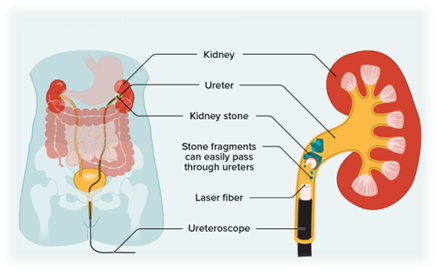
Nephrolithiasis is a significant and growing global health burden with rising prevalence and recurrence rates. Management of renal calculi sized 1–2.5 cm remains debated, with percutaneous nephrolithotomy (PCNL) and flexible ureteroscopy (fURS) being the most commonly used minimally invasive approaches. Evidence comparing both procedures in the Libyan setting is limited. This study aimed to compare the efficacy and safety outcomes of PCNL and fURS in patients with renal stones sized 1–2.5 cm, with a focus on perioperative characteristics, renal function, stone-free rate (SFR), and postoperative complications. A retrospective, multicenter observational study was conducted at two hospitals in Misrata, Libya, between January 2020 and December 2024. A total of twenty patients were included, equally divided between PCNL (n=10) and fURS (n=10). Demographic, clinical, and perioperative variables were collected from patient records. Outcomes assessed included renal function, SFR, drainage method, complications, blood transfusion, and need for secondary intervention. The mean age was 49.2 ± 12.2 years, with male predominance 55%. Solitary stones (75%) and renal pelvis location (60%) were the most common. The fURS group had a significantly higher prevalence of patients with a history of renal stones (70% vs. 20%, p=0.025) and previous extracorporeal shockwave lithotripsy (ESWL) (60% vs. 10%, p=0.019). Postoperatively, renal function abnormalities occurred only in fURS cases (p = 0.025). Drainage methods differed significantly, with fURS exclusively using double J stents and PCNL with a nephrostomy tube (p = 0.001). No statistically significant differences were found in SFR, operation time, hospital stay, fever, or transfusion rates between the two groups. Both PCNL and fURS are effective and safe for managing 1–2.5 cm renal stones, with comparable SFRs and complication rates. fURS were more commonly employed after failed conservative management and were associated with transient renal function impairment, whereas PCNL required nephrostomy drainage. Larger, prospective studies are needed to confirm these findings and guide practice in Libya.
- المراجع
- Cover Image
-
- التنزيلات
- منشور
- 2025-12-27
- إصدار
- Volume 1, Issue 4, 2025
- القسم
- Articles
كيفية الاقتباس
المؤلفات المشابهة
- Refaat Abusamra, Omran Aburgiga, Ali Ben Omran, Ureterorenoscopic Lithoclast Lithotripsy in the Management of Ureteric Stones; Does the Site of the Stone Affect the Results? , مجلة الرازي الطبية: Volume 2, Issue 2, 2026 (April to June)
- Nadia Alrawaiq, Fatima Younis, Mabrouka Ismail, Identification and Evaluation of Drug-Related Problems in Patients with Reduced Kidney Function: A Retrospective Study , مجلة الرازي الطبية: Volume 1, Issue 3, 2025
- Hossam Elkaib, Abu Baker Abdulrhman, Ali Elrahal, Parathyroid Hormone, Calcium, and Phosphorus Levels in Chronic Kidney Disease Patients: A Comprehensive Analysis , مجلة الرازي الطبية: Volume 1, Issue 3, 2025
- Najwa Belhamad, Boshra Fathalla, Marfoua Ali, Prevalence and Risk Factors of Urinary Tract Infection among Pregnant Women Attending Antenatal Clinics at Some Private Sectors in El Jabal Al Akhdar, Al-Byda, Libya , مجلة الرازي الطبية: Volume 2, Issue 1, 2026
- Ali Madour, Haleemah Abdulrahman, Amani Alkawash, Rayan Alforgani, Saja Alzowaghi, Manal Alklabi, Eanas Elmaihub, Evaluation of Knowledge and Practice Toward Cystic Fibrosis Disease Among Medical Students and the Residents of Western Libya , مجلة الرازي الطبية: Volume 1, Issue 3, 2025
- MUFTAH ELBAHLOUL, , Khadija AMER, Sana Alghennai, Mohamed Jahan, Hussien Elaswdi, Manal Abusebbara, Ans Elkhodory, Mohamed Eshtiwi, وعي طاقم التمريض في مرافق الصحة العامة في مصراتة بشأن انتقال فيروس نقص المناعة البشرية/الإيدز: مصدر قلق في مجال الصحة العامة والتخدير وإدارة الرعاية الصحية والتثقيف الصحي , مجلة الرازي الطبية: Volume 1, Issue 4, 2025
- Saleh AbuMahara, Hussein Rujbani, Kefah Elmahdi, Nusaiba Elhammal, Mohamed Abdulwaret, NasrEddine Shagloub, Comparison of Blood Loss in Total Knee Replacement Surgery: Intravenous vs. Intra-Articular Tranexamic Acid Administration: A Study Conducted at Al-Massara and Al-Rasheed Clinics in 2024 , مجلة الرازي الطبية: Volume 1, Issue 3, 2025
- Ahmed Aniba, Mustafa El-ahmar, Omar Danfour, Fathe Abulifa, Mona Abujazia, Mohammed Elfagieh, Integrated Surgical and Anesthetic Management of Pediatric Small Bowel Obstruction Due to Foreign Body Ingestion: A Comparative Case Series on Anatomical and Perioperative Implications , مجلة الرازي الطبية: Volume 1, Issue 4, 2025
- Wesam Elsaghayer, Wafaa Babh, Ali Shagan, Misbah Elfagih, Esraa Obida, Ebrahim Elmahjoubi, Mohamed Bashagha, Mohamed Elfagieh, Sentinel Lymph Node Metastasis in Breast Cancer: The First Libyan Report with Hormonal Profiling and International Comparison , مجلة الرازي الطبية: Volume 1, Issue 3, 2025
- Hosam Elarabi, Salem Salem, Rajaa Fadel, Wafa Abozaid, Abdullah Ahmad, Ahmed Shtawa, Moftah Ali, Assessment of Fluoride Concentration in Drinking Water and Its Correlation with Dental Caries in Primary School Children in Gharyan, Libya , مجلة الرازي الطبية: Volume 1, Issue 2, 2025
يمكنك أيضاً إبدأ بحثاً متقدماً عن المشابهات لهذا المؤلَّف.