









التضاد الجرثومي للمضادات الحيوية و العسل و المحفزات الحيوية تجاه البكتيريا التي تم عزلها من التهاب القدم السكري
- المؤلفون
-
-
Raja Moman
Department of Microbiology and Immunology, Faculty of Pharmacy, University of Tripoli, Tripoli, Libyaالمؤلف -
Nouralhuda Altair
Department of Microbiology and Immunology, Faculty of Pharmacy, University of Tripoli, Tripoli, Libyaالمؤلف -
Abdulkarem Tamer
Department of Microbiology and Immunology, Faculty of Pharmacy, University of Tripoli, Tripoli, Libyaالمؤلف -
Amnnah Ghalbun
Department of Microbiology and Immunology, Faculty of Pharmacy, University of Tripoli, Tripoli, Libyaالمؤلف -
Nagat EL-Magrahi
Department of Microbiology and Immunology, Faculty of Pharmacy, University of Tripoli, Tripoli, Libyaالمؤلف
-
- الكلمات المفتاحية:
- المضادات الحيوية، العسل و المحفزات الحيوية، التهاب القدم السكري، الممرضات المقاومة لمضادات الجراثيم
- الملخص
-
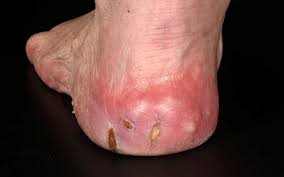
In addition to being the main factor associated with amputation, diabetic foot infections (DFIs) are associated with major morbidity, increased mortality, and reduced quality of life. Appropriate treatment choice is very important to reduce failure, antimicrobial resistance, adverse events, and costs. This study aimed to investigate the causative pathogens of DFIs in patients from Tripoli University Hospital, their profile of antimicrobial susceptibility towards commonly used antibiotics, two types of honey, and different strains of probiotics, including Lactobacillus acidophilus (L. acidophilus), Lactobacillus reuteri (L. reuteri), and Saccharomyces boulardii (S. boulardii). This prospective study included 50 patients admitted to Tripoli University Hospital. Bacteriological specimens were obtained and processed using standard procedures for microbiological culture and sensitivity testing; their antibiotic susceptibility pattern was determined using the Kirby-Bauer disk diffusion method. The agar diffusion method was applied to honey and probiotics. The most common location of ulceration was the toe (60%), plantar surface (26%), and dorsal portion (14%). A total of 88 bacterial isolates were obtained. Mono-microbial cultures were (34%) and (66%) were polymicrobial. Gram-positive bacteria represented 45.4%; the rest are gram-negative bacteria. The most common isolates were Staphylococcus aureus (S. aureus) (28.4%), Escherichia coli (E. coli) (9.1%), and Pseudomonas aeruginosa (P. aeruginosa) (6.8%). Most gram-negative isolates were sensitive to ciprofloxacin and gentamicin, followed by meropenem. Likewise, ciprofloxacin was the most effective against gram-positive isolates. Both L. acidophilus and L. reuteri inhibited the growth of all gram-negative isolates. In addition, there was no effect of S. boulardii on all isolates except P. aeruginosa and Klebsiella oxytoca. Both Enterobacter cloacae and Acinetobacter baumannii (A. baumannii) were resistant to all tested probiotic strains. Based on our results L. reuteri was more effective against all gram-positive isolates. Both types of honey inhibited the growth of all isolates, including multidrug-resistant E. cloacae and A. baumannii strains. On the contrary, Bacillus spp. were resistant to both honey types. The present study confirmed the high prevalence of multidrug-resistant pathogens in diabetic foot ulcers and that tested strains of probiotics and honey prevent the growth of a wide range of potential human pathogens, including 15 species of bacteria. This knowledge is crucial for planning treatment with new appropriate antimicrobials, reducing resistance patterns, and minimizing healthcare costs.
- المراجع
- Cover Image
-
- التنزيلات
- منشور
- 2025-04-21
- إصدار
- Volume 1, Issue 1, 2025
- القسم
- Articles
كيفية الاقتباس
المؤلفات المشابهة
- Ahmed Alsharksi, Abdalla Ali, Adam Mustapha, Muna Alshagmani, الخصائص البكتيرية وأنماط مقاومتها للمضادات الحيوية في العزلات المستخلصة من وحدات العناية المركزة بالمستشفيات الليبية." , مجلة الرازي الطبية: Volume 1, Issue 3, 2025
- Shahrazad Ahmed, Neyaf Alageedi, Eman Muhsin, Doaa Abdulwahab, The Role of Immune Response in Bacterial Urinary Tract Infections in Iraq: A Review , مجلة الرازي الطبية: Volume 1, Issue 2, 2025
- Nawfal Hussein, Liwar Ahmed, Halder Abozait, Antimicrobial Resistance in Iraq: A Public Health Emergency in the Shadow of Conflict , مجلة الرازي الطبية: Volume 1, Issue 3, 2025
- Ahmed Alsharksi, Abdalla Ali, Adam Mustapha, "السموم A وB لبكتيريا Clostridium difficile كمسبب لمرض الإسهال: دراسة بيانات من مستشفى جامعي في شمال قبرص" , مجلة الرازي الطبية: Volume 1, Issue 4, 2025
- Alaa ALMoula, Lana Mansor, Sarmad Almaula, اهمية البروبيوتيك في الانسان والحيوان , مجلة الرازي الطبية: Volume 1, Issue 4, 2025
- Sara Fathi, Heba Hassan, Laila Alfageih, Prevalence of Carbapenem-Resistant Enterobacteriaceae Isolated from Clinical Samples in Medical Tobruk Center , مجلة الرازي الطبية: Volume 1, Issue 3, 2025
- Ahmed Atia, Antibiotic Resistance in Libya and the Prevalence of Antibiotic Self-Medication: A Review , مجلة الرازي الطبية: Volume 1, Issue 1, 2025
- Shahad Alwan, Molecular detection of the MexA efflux pump gene in Pseudomonas aeruginosa isolated from Diyala Province , مجلة الرازي الطبية: Volume 1, Issue 3, 2025
- MUFTAH ELBAHLOUL, , Khadija AMER, Sana Alghennai, Mohamed Jahan, Hussien Elaswdi, Manal Abusebbara, Ans Elkhodory, Mohamed Eshtiwi, وعي طاقم التمريض في مرافق الصحة العامة في مصراتة بشأن انتقال فيروس نقص المناعة البشرية/الإيدز: مصدر قلق في مجال الصحة العامة والتخدير وإدارة الرعاية الصحية والتثقيف الصحي , مجلة الرازي الطبية: Volume 1, Issue 4, 2025
- Mahmud Abushhewa, Mohamed Agilla, Ashraf Naass, Khadega Alazoumi, Abdulati Salem, Taj Al-Din Jaber, Mohammed Abdulqadir, Knowledge, Attitude, and Practices about Antibiotic Misuse among Libyan Community: A Cross-Sectional Survey , مجلة الرازي الطبية: Volume 1, Issue 3, 2025
يمكنك أيضاً إبدأ بحثاً متقدماً عن المشابهات لهذا المؤلَّف.