








Understanding the Hidden Immune Evasion Mechanisms by Cancer Cells and Therapeutic Approaches
- Authors
-
-
Marwah Rasah
Department of Zoology, Faculty of Arts and Sciences, Gharyan University, LibyaAuthor -
J. M. Jbireal
Department of Physiology, Faculty of Medicine, Sabratha University, Libya. Knowledge Center for Scientific Consultation, Academic Services, and Research, Sabratha, LibyaAuthor
-
- Keywords:
- Cancer Immunotherapy, Immune Escape, Tumor Microenvironment, Cancer Vaccines, Adoptive T-cell Therapy
- Abstract
-
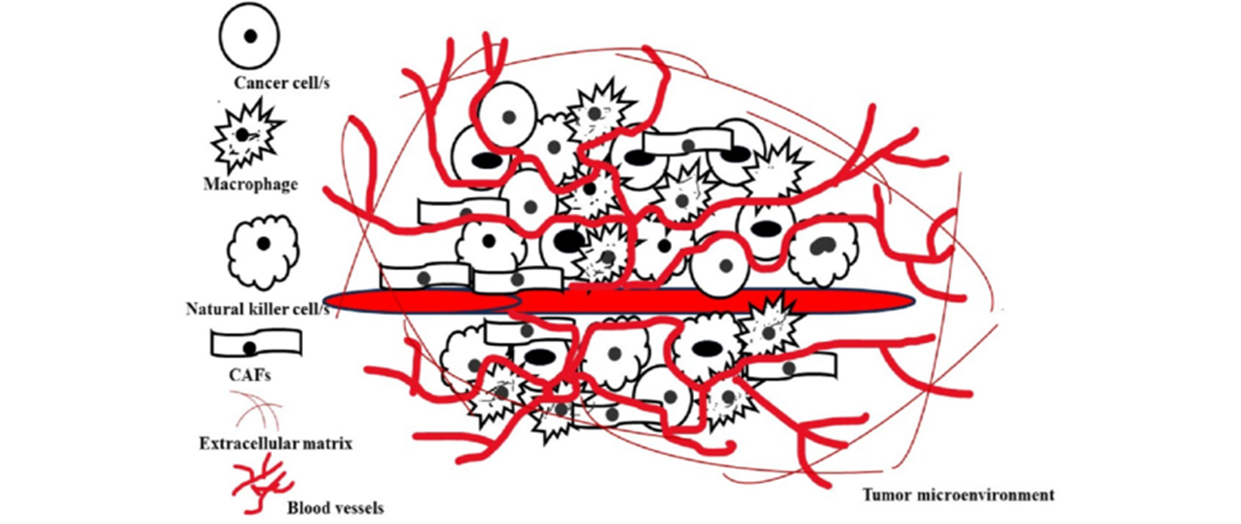
The immune system plays a fundamental role in recognizing and eliminating malignant cells to maintain cellular homeostasis. However, the tumor microenvironment (TME), composed of tumor and stromal cells, extracellular matrix, vascular components, and soluble mediators, promotes cancer progression by enabling immune escape mechanisms. Advances in cancer immunology have led to the development of various immunotherapeutic strategies designed to restore antitumor immune responses. These include monoclonal antibodies that selectively target tumor-associated antigens, therapeutic cancer vaccines that stimulate durable immune protection, and adoptive cell therapies that enhance tumor-specific T-cell activity. Although these approaches have shown significant clinical benefits, immune suppression within the TME continues to limit treatment efficacy. A deeper understanding of immune checkpoint pathways and tumor-induced immune dysfunction is therefore essential to improve current therapies and guide future innovations in cancer management.
- References
- Cover Image
-
- Downloads
- Published
- 2025-12-15
- Issue
- Volume 1, Issue 4, 2025
- Section
- Articles
How to Cite
Similar Articles
- Eman Mohammed, Najat Alasawad, Flow Cytometry in the Detection of Abnormal Cells and Cell Debris Based on the Expression of Cellular Markers , Razi Medical Journal: Volume 1, Issue 4, 2025
- Shahrazad Ahmed, Neyaf Alageedi, Eman Muhsin, Doaa Abdulwahab, The Role of Immune Response in Bacterial Urinary Tract Infections in Iraq: A Review , Razi Medical Journal: Volume 1, Issue 2, 2025
- Ali Shagan, Khaled Bensalah, Wafaa Babh, Wesam Elsaghayer, Ebrahim Elmahjoubi, Esraa Obida, Mohamed Elfagieh, Incremental Diagnostic Value of Pancytokeratin Immunohistochemistry in Sentinel Lymph Node Assessment for Breast Cancer , Razi Medical Journal: Volume 2, Issue 1, 2026
- Salahaldin Alfurjany, Shamsi Shamsi, Huda Ibrahim, Hanaa Al-Saidi, Ghada Al-Amin, Comparative Antifungal Efficacy of Ketoconazole and Nystatin on Chlamydospore Production in Candida albicans Isolated from Oral Lesions in Cancer Patients , Razi Medical Journal: Volume 1, Issue 4, 2025
- Nowar Bhari, Hamed Bogdadi, Shamsi Saad, Fagonia glutinosa from Libya as a Potential Source of Lead Compounds: GC-MS Characterization of Metabolites with Antimicrobial and Anticancer Activities , Razi Medical Journal: Volume 1, Issue 3, 2025
- Alaa ALMoula, Lana Mansor, Sarmad Almaula, The Importance of Probiotics in Human and Animal Life: A Review , Razi Medical Journal: Volume 1, Issue 4, 2025
- Misbah Elfagih, Mohamed Elfagieh, Recurrent Retroauricular Myxofibrosarcoma in Libya: A Case Report , Razi Medical Journal: Volume 2, Issue 1, 2026
- Sarah Alfaqaih, Nawara Ghlio, Parental Stress and Childhood Cancer in Libya: A Cross-Sectional Study in Misurata , Razi Medical Journal: Volume 1, Issue 3, 2025
- Ensherah Ben-Zekri, Nabila Rghebi, Zahrah Alrifae, Abtihal Alaqeeli, A Survey-Based Assessment of the Use and Perceived Effectiveness of PRP Therapy for Joint Disorders in Tripoli, Libya , Razi Medical Journal: Volume 2, Issue 2, 2026 (April to June)
- Doaa Ahmed, Rodaba Bitrou, Najat Alrumayh, Enas Ramih, Mohamed Emhemed, Abdalla Juwid, Abdussalam Sahoub, Abdsalam Rabie, Monsef Algouti, Mussa Alragig, Rabia Awaid, Mohamed Elfagieh, Eramah Ermiah, Comparison of Survival Outcomes between Modified Radical Mastectomy and Breast Conserving Surgery in Libyan Women with Early Breast Cancer , Razi Medical Journal: Volume 2, Issue 1, 2026
You may also start an advanced similarity search for this article.