









Evaluation of Uterine Fibroids Among Women in Tripoli
- Authors
-
-
Abulgasem Dakhil
Department of Anesthesia and Intensive Care, Faculty of Medical Technology, University of Tripoli, Tripoli, Libya.Author -
Mohamed Abuagela
Department of Anesthesia and Intensive Care, Faculty of Medical Technology, University of Tripoli, Tripoli, Libya.Author -
Abdul Aty Dakhil
Faculty of Science and Medical Technology, University of Tripoli, Tripoli, Libya.Author -
Wasim Elarbi
Department of Anesthesia and Intensive Care, Faculty of Medical Technology, University of Tripoli, Tripoli, LibyaAuthor -
Aisha Elansari
Department of Anesthesia and Intensive Care, Faculty of Medical Technology, University of Tripoli, Tripoli, LibyaAuthor
-
- Keywords:
- Uterine Fibroids, Age, Risk Factors, Symptoms, Diagnostic Device
- Abstract
-
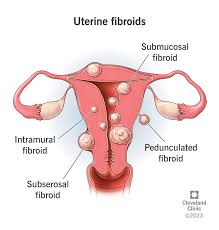
Uterine fibroids (leiomyomas) are common benign tumors of the uterus, composed of smooth muscle cells, fibroblasts, and fibrous extracellular matrix. While typically non-cancerous, some variants exhibit malignant potential. Their incidence and severity are influenced by race, with Black women developing fibroids earlier and experiencing more aggressive forms. Clinically, fibroids account for 30–50% of hysterectomies and impose substantial morbidity and healthcare costs on reproductive-aged women. This study aims to evaluate uterine fibroids among women, including the most common symptoms, risk factors, complications, and diagnostic devices. The research was designed to investigate complications and symptoms in 80 uterine fibroid patients at Tripoli Medical Center. 80 uterine fibroid patients (aged 17-45 years) revealed several key findings. The majority of participants were under 30 years old (48%), married (82.5%), and weighed 70-90 kg (55.25%). Cervicitis (45%) and hypertension (35%) emerged as the predominant risk factors, while abdominal cramps (60%) and irregular menstrual cycles (40%) were the most common symptoms. Trans-vaginal endoscopy served as the primary diagnostic method (55%), with 39% of patients experiencing pregnancy complications. Statistical analysis showed significant associations between younger age/marital status and cervicitis (p<0.05). These findings demonstrate that uterine fibroids predominantly affect younger women of reproductive age, with a strong association observed between certain demographic factors and specific risk factors. Notably, cervicitis showed significant associations with younger age and married status, while hypertension was particularly prevalent among patients with higher body weight.
- References
- Cover Image
-
- Downloads
- Published
- 2025-05-09
- Issue
- Volume 1, Issue 2, 2025
- Section
- Articles
How to Cite
Similar Articles
- Ensherah Ben-Zekri, Nabila Rghebi, Zahrah Alrifae, Abtihal Alaqeeli, A Survey-Based Assessment of the Use and Perceived Effectiveness of PRP Therapy for Joint Disorders in Tripoli, Libya , Razi Medical Journal: Volume 2, Issue 2, 2026 (April to June)
- Tarik Enaairi, Sundus Aldeebani, Hawa Abduljalil, Buschke-Fischer-Brauer Keratosis Punctata of the Palmar Creases in A 45-Year-Old Libyan Female: A Case Report , Razi Medical Journal: Volume 1, Issue 3, 2025
- Eman Mohammed, Najat Alasawad, Flow Cytometry in the Detection of Abnormal Cells and Cell Debris Based on the Expression of Cellular Markers , Razi Medical Journal: Volume 1, Issue 4, 2025
- Mohanad Al-Ghanimi, Manaf Yaseen, Wassan Nori, Unexpected Vascular Anomaly; Right Subclavian-Pulmonary Artery Connection Unraveled during Routine PDA Closer; Case Report , Razi Medical Journal: Volume 1, Issue 3, 2025
- Salem Swieb, Mohamed Elzwawi, Malik Delheen, Evaluating Outcomes of Percutaneous Nephrolithotomy Versus Flexible Ureteroscopy for Renal Calculi: A Retrospective Observational Study in Misrata, Libya , Razi Medical Journal: Volume 1, Issue 4, 2025
- Ahmed Garad, Abdul Azim Al-Khadrawi, Real-Time Electrocardiogram Monitoring System Using Internet of Things Technology and ESP32 Microcontroller for Remote Healthcare Applications , Razi Medical Journal: Volume 2, Issue 2, 2026 (April to June)
- Ahmed Eshtaiwi, Khaled Elheshani, Prevalence of Bronchial Asthma among Patients with Allergic Rhinitis in Misurata, Libya: A Cross‑Sectional Study , Razi Medical Journal: Volume 2, Issue 1, 2026
- Mohammed Ben Saud, Omar Alhaddad, Salem Shenaisheh, Anas Ben Amer, Mohamed Shetshat, Najah Arrotob, Noura Aljamal, Ahmed Swesi, Kahlil Albergli, Hoda Alareesh, Knowledge, Attitude, and Practice regarding Road Traffic Signs and Regulations among the General Population of Misurata City, Libya , Razi Medical Journal: Volume 2, Issue 1, 2026
- Suad Altubouli, Hana Hafalish, Marfoua Ali, Serum 25-Hydroxy Vitamin D Levels and Disease Severity in Pediatric Atopic Dermatitis: An Inverse Correlation , Razi Medical Journal: Volume 2, Issue 1, 2026
- Al Basher Alafi, Ahmed Ashtawa, Siddig Bushra Mohamed, Marwa Al Mabrok, Waed Aldaekh, Hebah Zahmoul, Obesity and Headache in Libyan Adults: Findings from a Descriptive Cross‑Sectional Study in Gharyan City , Razi Medical Journal: Volume 2, Issue 1, 2026
You may also start an advanced similarity search for this article.