






A Comparative Study on the Efficacy of Blue Light versus Red Light in Alleviating Symptoms of Dry Eye
- المؤلفون
-
-
Aimen Almudi
Department of Ophthalmology, Faculty of Medicine, University of Zawia, Zawia, Libyaالمؤلف -
Mohamed Bakeer
Department of Ophthalmology, Faculty of Medicine, University of Zawia, Zawia, Libyaالمؤلف -
Ashraf Rabti
Department of Ophthalmology, Faculty of Medicine, University of Zawia, Zawia, Libyaالمؤلف
-
- الكلمات المفتاحية:
- Efficacy, Blue Light Versus Red Light, Symptoms, Dry Eye
- الملخص
-
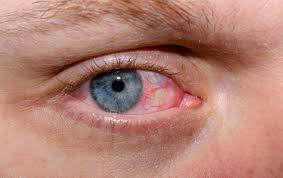
To identify the level of efficacy between low-level blue light therapy and red-light therapy in reducing symptoms and signs of a dry eye disease (DED) linked to dysfunction of the meibomian glands (MGD) in the first place. This is a prospective, random, blind, parallel group clinical trial that recruited 96 adults (mean age 45 +12 years old) with mild-to-moderate DED (OSDI 13 +10 seconds TBUT). The participants were assigned to a random trial (1: 1) to administer low-level light therapy (LLLT) with two sessions per week, with a 4-week duration (8 sessions): blue light (415-495 nm) or red light (620-750 nm) with a fixed irradiance. Change in baseline and week 4 Ocular Surface Disease Index (OSDI) was the primary outcome. Secondary outcomes consisted of noninvasive tear break-up time (NITBUT), tear meniscus height (TMH), lipid layer thickness, and safety parameters that were measured at baseline, week 4, and week 12. Both treatments were significant (p < 0.001 between groups) in improving symptoms and signs. Red light performed better than blue light in reducing OSDI (37.8 = 11.9 to 16.1 = 8.5) and (38.2 = 12.4 to 22.8 = 9.5), respectively; between-group p < 0.001). Red light also showed better gains in NITBUT (+4.8 vs. +2.9 seconds, p = 0.004), lipid layer thickness (+24 vs. +9 nm, p < 0.001), and TMH. Blue light had no significant improvement, especially in a subgroup of blepharitis. There were no severe negative incidents. Red light LLLT is better and more effective than blue light in relieving DED caused by MGD, probably because it has better photobiomodulation of meibomian glands. There is the possibility that blue light has an adjunctive antimicrobial role. The results suggest that red light is a better standalone wavelength for light-based DED management.
- المراجع
- Cover Image
-
- التنزيلات
- منشور
- 2026-03-04
- إصدار
- Volume 2, Issue 1, 2026
- القسم
- Articles
كيفية الاقتباس
المؤلفات المشابهة
- Sara Taeb, Ghufran Dehoom, Khuloud Ajaj, Comparison of the Efficacy of Inositol-Containing Medication Only versus Metformin and Inositol among Libyan Infertile Women with Polycystic Ovarian Syndrome , مجلة الرازي الطبية: Volume 1, Issue 3, 2025
- Salahaldin Alfurjany, Shamsi Shamsi, Huda Ibrahim, Hanaa Al-Saidi, Ghada Al-Amin, Comparative Antifungal Efficacy of Ketoconazole and Nystatin on Chlamydospore Production in Candida albicans Isolated from Oral Lesions in Cancer Patients , مجلة الرازي الطبية: Volume 1, Issue 4, 2025
- Nahla Labyad, Masoud Kahmasi, Amjad Mansuor, Awareness, Perception, and Attitudes of Medical Professionals Toward Complementary and Alternative Medicine Devices in Rheumatism: A Survey of Tripoli Community Pharmacies , مجلة الرازي الطبية: Volume 1, Issue 4, 2025
- Marfoua Ali, Faraj Sulayman, Elham keeshar, General Health Parameters in Children Aged 6–10 Years in El‑Beyda, Libya , مجلة الرازي الطبية: Volume 2, Issue 1, 2026
- Salem Swieb, Mohamed Elzwawi, Malik Delheen, Evaluating Outcomes of Percutaneous Nephrolithotomy Versus Flexible Ureteroscopy for Renal Calculi: A Retrospective Observational Study in Misrata, Libya , مجلة الرازي الطبية: Volume 1, Issue 4, 2025
- Abulgasem Dakhil, Mohamed Abuagela, Abdul Aty Dakhil, Wasim Elarbi, Aisha Elansari, Evaluation of Uterine Fibroids Among Women in Tripoli , مجلة الرازي الطبية: Volume 1, Issue 2, 2025
- Mahmoud Ali, Abdurrezag Said, Khawlah Alghzawi, Israa Elkhoja, Sara Morgham, Sondis Hasan, Mofida Fathi, Ritaj Agha, Karima Morgham, Crossed versus Lateral K‑Wire Fixation for Supracondylar Humeral Fractures in Children: Comparative Outcomes at Tripoli Central Hospital (2023–2025) , مجلة الرازي الطبية: Volume 2, Issue 2, 2026 (April to June)
- Amhamad Alhajaji, Salem Almiladi, Ahmed Alhammali, Surgical Repair of Congenital Chest Wall Deformity (Pectus Excavatum): A 20-Year Multicenter Experience , مجلة الرازي الطبية: Volume 1, Issue 1, 2025
- Basheer Alhadheeri, Comorbidities and Treatment Outcomes of Acute Appendicitis at a Tertiary Center in Libya , مجلة الرازي الطبية: Volume 1, Issue 3, 2025
- Saleh AbuMahara, Hussein Rujbani, Kefah Elmahdi, Nusaiba Elhammal, Mohamed Abdulwaret, NasrEddine Shagloub, Comparison of Blood Loss in Total Knee Replacement Surgery: Intravenous vs. Intra-Articular Tranexamic Acid Administration: A Study Conducted at Al-Massara and Al-Rasheed Clinics in 2024 , مجلة الرازي الطبية: Volume 1, Issue 3, 2025
يمكنك أيضاً إبدأ بحثاً متقدماً عن المشابهات لهذا المؤلَّف.