








Bacterial Profile and Their Antimicrobial Susceptibility Pattern of Isolates Recovered from Intensive Care Units of Libyan Hospitals.
- Authors
-
-
Ahmed Alsharksi
Department of Microbiology, Faculty of Medicine, Misurata University, LibyaAuthor -
Abdalla Ali
Department of Chemistry, Faculty of Education, Misurata University, LibyaAuthor -
Adam Mustapha
Department of Microbiology, Faculty of Life Sciences, University of Maiduguri, NigeriaAuthor -
Muna Alshagmani
Department of Medical Laboratory, Alyaqen Medical Science College, Misurata, LibyaAuthor
-
- Keywords:
- Hospital-Associated Infection, Antibiotic Resistance, ICU, Public Health, Misurata, Libya.
- Abstract
-
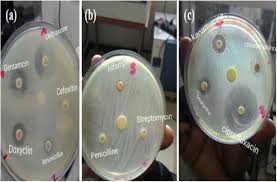
Presence of Bacterial contamination in hospital environments, particularly intensive care units, poses a serious threat to global public health in the world with high morbidity and mortality rates. Of more concern is the emergence of multidrug-resistant bacteria on medical devices, inanimate surfaces, health care providers, and patients in the intensive care unit, which could lead to further cross-contamination and infection. This study aimed to assess the bacterial profile and their antimicrobial susceptibility patterns of bacterial isolates from the intensive care unit of the Emergency unit, internal medicine, and coronary unit of Misurata Central Unit of Misurata, Libya. A unit-based cross-sectional study was conducted on three Intensive Care units from 1st December 2024 to 27th December 2024. In this project, a total of 102 swab samples from the intensive care unit environment were collected using cotton swabs. Standard Microbiological techniques to include culture method and Gram stain, were employed for the identification of the isolates. Antimicrobial susceptibility tests for bacterial isolates were performed by using the Kirby-Bauer disk diffusion method. In the total of 102 swab samples, bacterial growth was observed in 19.6% (20/102) of the total samples. Out of the total bacterial growth recovered, the Coronary care unit had the highest, 50% (10/20), followed by the Emergency unit 35% (7/20), and the Internal medicine unit had 15% (3/20). The most frequently found isolate was Staphylococcus aureus 75% (15/20), followed by Streptococcus pyogenes 15% (3/20), Pseudomonas aeruginosa 5% (1/20), and E coli 5% (1/20). Results of the antibiotic susceptibility pattern revealed that most of the isolates are multidrug-resistant. Results from this study showed bacterial contamination of the ICU environments and their resistance patterns, which suggest that patients are prone to hospital-associated infection. It is recommended that strict sterilization of intensive care units be standardized and the hygiene of hospital workers be enforced to prevent transmission of infection in hospital environments.
- References
- Cover Image
-
- Downloads
- Published
- 2025-08-02
- Issue
- Volume 1, Issue 3, 2025
- Section
- Articles
How to Cite
Most read articles by the same author(s)
- Ahmed Alsharksi, Abdalla Ali, Adam Mustapha, Clostridium difficile A-B Toxins as a Cause of Diarrheal Disease: Data from a University Hospital in Northern Cyprus , Razi Medical Journal: Volume 1, Issue 4, 2025
Similar Articles
- Alaa ALMoula, Lana Mansor, Sarmad Almaula, The Importance of Probiotics in Human and Animal Life: A Review , Razi Medical Journal: Volume 1, Issue 4, 2025
- Ridha Itrunbah, Baha Ettrmal, Zenab Elfzzani, Hatem Omar, Prevalence, Clinical Characteristics, Etiologies, and Outcomes of Newborns with Respiratory Distress in Zawia Medical Center, Libya , Razi Medical Journal: Volume 2, Issue 2, 2026 (April to June)
- Hawa Abduljalil, Tarik Enaairi, Striae Gravidarum and Its Effect on the Quality of Life Index in Libyan Pregnant Women , Razi Medical Journal: Volume 1, Issue 1, 2025
- Ahmed Atia, Mohamed Elfagieh, Razi Medical Journal: Launching a New Journal and Call for Paper , Razi Medical Journal: Volume 1, Issue 1, 2025
- Salem Elfard, Zinab Elfituri, Integration of Social and Behavioral Sciences (SBS) in Undergraduate Libyan Medical Education Programs , Razi Medical Journal: Volume 1, Issue 3, 2025
- Doaa Ahmed, Rodaba Bitrou, Najat Alrumayh, Enas Ramih, Mohamed Emhemed, Abdalla Juwid, Abdussalam Sahoub, Abdsalam Rabie, Monsef Algouti, Mussa Alragig, Rabia Awaid, Mohamed Elfagieh, Eramah Ermiah, Comparison of Survival Outcomes between Modified Radical Mastectomy and Breast Conserving Surgery in Libyan Women with Early Breast Cancer , Razi Medical Journal: Volume 2, Issue 1, 2026
- Ahmed Atia, Eshraq Alsherif, Astabraq Ali, Raghad Nour Aldden, Samar Mohammed, Additive Effect of High Sugar Intake and Prolonged Screen Exposure on Cognitive Performance in Young Adults , Razi Medical Journal: Volume 2, Issue 1, 2026
- Enas Nasr, Ahlaam Mowloud, Abtisam Alharari, Pathogenicity of Soil-Borne Fungi on Two Tomato Cultivars , Razi Medical Journal: Volume 2, Issue 1, 2026
- Refaat Abusamra, Omran Aburgiga, Ali Ben Omran, Ureterorenoscopic Lithoclast Lithotripsy in the Management of Ureteric Stones; Does the Site of the Stone Affect the Results? , Razi Medical Journal: Volume 2, Issue 2, 2026 (April to June)
- Faiza Nouh, Salima Elfagi, Flood Impacts on Food Security, Reflections on the Derna Flood: A Systematic Review , Razi Medical Journal: Volume 2, Issue 1, 2026
You may also start an advanced similarity search for this article.