








Bacterial Profile and Their Antimicrobial Susceptibility Pattern of Isolates Recovered from Intensive Care Units of Libyan Hospitals.
- Authors
-
-
Ahmed Alsharksi
Department of Microbiology, Faculty of Medicine, Misurata University, LibyaAuthor -
Abdalla Ali
Department of Chemistry, Faculty of Education, Misurata University, LibyaAuthor -
Adam Mustapha
Department of Microbiology, Faculty of Life Sciences, University of Maiduguri, NigeriaAuthor -
Muna Alshagmani
Department of Medical Laboratory, Alyaqen Medical Science College, Misurata, LibyaAuthor
-
- Keywords:
- Hospital-Associated Infection, Antibiotic Resistance, ICU, Public Health, Misurata, Libya.
- Abstract
-
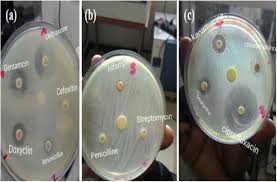
Presence of Bacterial contamination in hospital environments, particularly intensive care units, poses a serious threat to global public health in the world with high morbidity and mortality rates. Of more concern is the emergence of multidrug-resistant bacteria on medical devices, inanimate surfaces, health care providers, and patients in the intensive care unit, which could lead to further cross-contamination and infection. This study aimed to assess the bacterial profile and their antimicrobial susceptibility patterns of bacterial isolates from the intensive care unit of the Emergency unit, internal medicine, and coronary unit of Misurata Central Unit of Misurata, Libya. A unit-based cross-sectional study was conducted on three Intensive Care units from 1st December 2024 to 27th December 2024. In this project, a total of 102 swab samples from the intensive care unit environment were collected using cotton swabs. Standard Microbiological techniques to include culture method and Gram stain, were employed for the identification of the isolates. Antimicrobial susceptibility tests for bacterial isolates were performed by using the Kirby-Bauer disk diffusion method. In the total of 102 swab samples, bacterial growth was observed in 19.6% (20/102) of the total samples. Out of the total bacterial growth recovered, the Coronary care unit had the highest, 50% (10/20), followed by the Emergency unit 35% (7/20), and the Internal medicine unit had 15% (3/20). The most frequently found isolate was Staphylococcus aureus 75% (15/20), followed by Streptococcus pyogenes 15% (3/20), Pseudomonas aeruginosa 5% (1/20), and E coli 5% (1/20). Results of the antibiotic susceptibility pattern revealed that most of the isolates are multidrug-resistant. Results from this study showed bacterial contamination of the ICU environments and their resistance patterns, which suggest that patients are prone to hospital-associated infection. It is recommended that strict sterilization of intensive care units be standardized and the hygiene of hospital workers be enforced to prevent transmission of infection in hospital environments.
- References
- Cover Image
-
- Downloads
- Published
- 2025-08-02
- Issue
- Volume 1, Issue 3, 2025
- Section
- Articles
How to Cite
Most read articles by the same author(s)
- Ahmed Alsharksi, Abdalla Ali, Adam Mustapha, Clostridium difficile A-B Toxins as a Cause of Diarrheal Disease: Data from a University Hospital in Northern Cyprus , Razi Medical Journal: Volume 1, Issue 4, 2025
Similar Articles
- Amhamed Alhajaji, Faisal Abufalgha, Acute Intestinal Obstruction: Surgical Considerations , Razi Medical Journal: Volume 1, Issue 4, 2025
- Adell Abubakeer, Nabel Mansour, The Association Between ABO and Rhesus Blood Groups and Diabetes Mellitus in Libya: A Systematic Review of National Evidence , Razi Medical Journal: Volume 1, Issue 3, 2025
- Salahaldin Alfurjany, Shamsi Shamsi, Huda Ibrahim, Hanaa Al-Saidi, Ghada Al-Amin, Comparative Antifungal Efficacy of Ketoconazole and Nystatin on Chlamydospore Production in Candida albicans Isolated from Oral Lesions in Cancer Patients , Razi Medical Journal: Volume 1, Issue 4, 2025
- Nowar Bhari, Hamed Bogdadi, Shamsi Saad, Fagonia glutinosa from Libya as a Potential Source of Lead Compounds: GC-MS Characterization of Metabolites with Antimicrobial and Anticancer Activities , Razi Medical Journal: Volume 1, Issue 3, 2025
- Abulgasem Dakhil, Mohamed Abuagela, Abdul Aty Dakhil, Wasim Elarbi, Aisha Elansari, Evaluation of Uterine Fibroids Among Women in Tripoli , Razi Medical Journal: Volume 1, Issue 2, 2025
- Sara Taeb, Ghufran Dehoom, Khuloud Ajaj, Comparison of the Efficacy of Inositol-Containing Medication Only versus Metformin and Inositol among Libyan Infertile Women with Polycystic Ovarian Syndrome , Razi Medical Journal: Volume 1, Issue 3, 2025
- Ensherah Ben-Zekri, Nabila Rghebi, Zahrah Alrifae, Abtihal Alaqeeli, A Survey-Based Assessment of the Use and Perceived Effectiveness of PRP Therapy for Joint Disorders in Tripoli, Libya , Razi Medical Journal: Volume 2, Issue 2, 2026 (April to June)
- Safaa Shehab, Hiba Awad, Shahrazad Khalaf, Zahraa Dawood, Sabaa Kareem, Fatima Salman, Blood-borne Viral Infections in Hemodialysis Units in Iraq: A Narrative Review of Prevalence and Contributing Factors , Razi Medical Journal: Volume 1, Issue 3, 2025
- Faraj Atiyah, Rabihah Hamad, Munyah Hammad, Impact of Salt Stress on Pea (Pisum sativum) Physiological Features in Lab Settings , Razi Medical Journal: Volume 1, Issue 2, 2025
- Nahla Labyad, Masoud Kahmasi, Amjad Mansuor, Awareness, Perception, and Attitudes of Medical Professionals Toward Complementary and Alternative Medicine Devices in Rheumatism: A Survey of Tripoli Community Pharmacies , Razi Medical Journal: Volume 1, Issue 4, 2025
You may also start an advanced similarity search for this article.